
PA6 vs PP vs PE Corrugated Tubing: A Selection Guide
ZHENGDE ·
Choosing corrugated tubing takes more than picking PA6, PP or PE. Start with temperature, installation space, cable bundle size and connections, then compare the specific material grade and finished-product test data.
1. Define operating requirements before choosing a material
Will the tubing stay fixed or move repeatedly? Will it be installed indoors or outdoors? Will it contact oil, cleaners or other substances? These questions are more useful than asking which material is best. Cable-protection tubing must not be assumed suitable for pressurized fluid transfer without validation.
- Temperature: distinguish continuous conditions from short peaks and their duration.
- Mechanical conditions: record bend radius, motion frequency, abrasion and compression risks.
- Environment: specify sunlight, moisture and the actual chemicals involved.
- Validation: state the required standards, test methods and acceptance criteria.
2. PA6, PP and PE: compare grades, not just names
The table below provides questions for a supplier discussion, not a performance ranking. Formulation, additives, wall thickness and construction can vary within the same material family. A material name alone does not establish a flame rating, temperature range or service life.
| Material | Selection context | What to verify |
|---|---|---|
| PA6 / Nylon 6 | A material to include when comparing conduit for machinery and automotive wiring. | Check grade-specific abrasion, bending, moisture and temperature data. |
| PP / Polypropylene | A material to include when comparing tubing for equipment wiring and cable bundles. | Check temperature, chemical exposure, flame performance and outdoor requirements for the formulation. |
| PE / Polyethylene | A material to include when comparing cable protection and flexible routing options. | Check temperature, bending, compression and environmental suitability for the selected grade. |
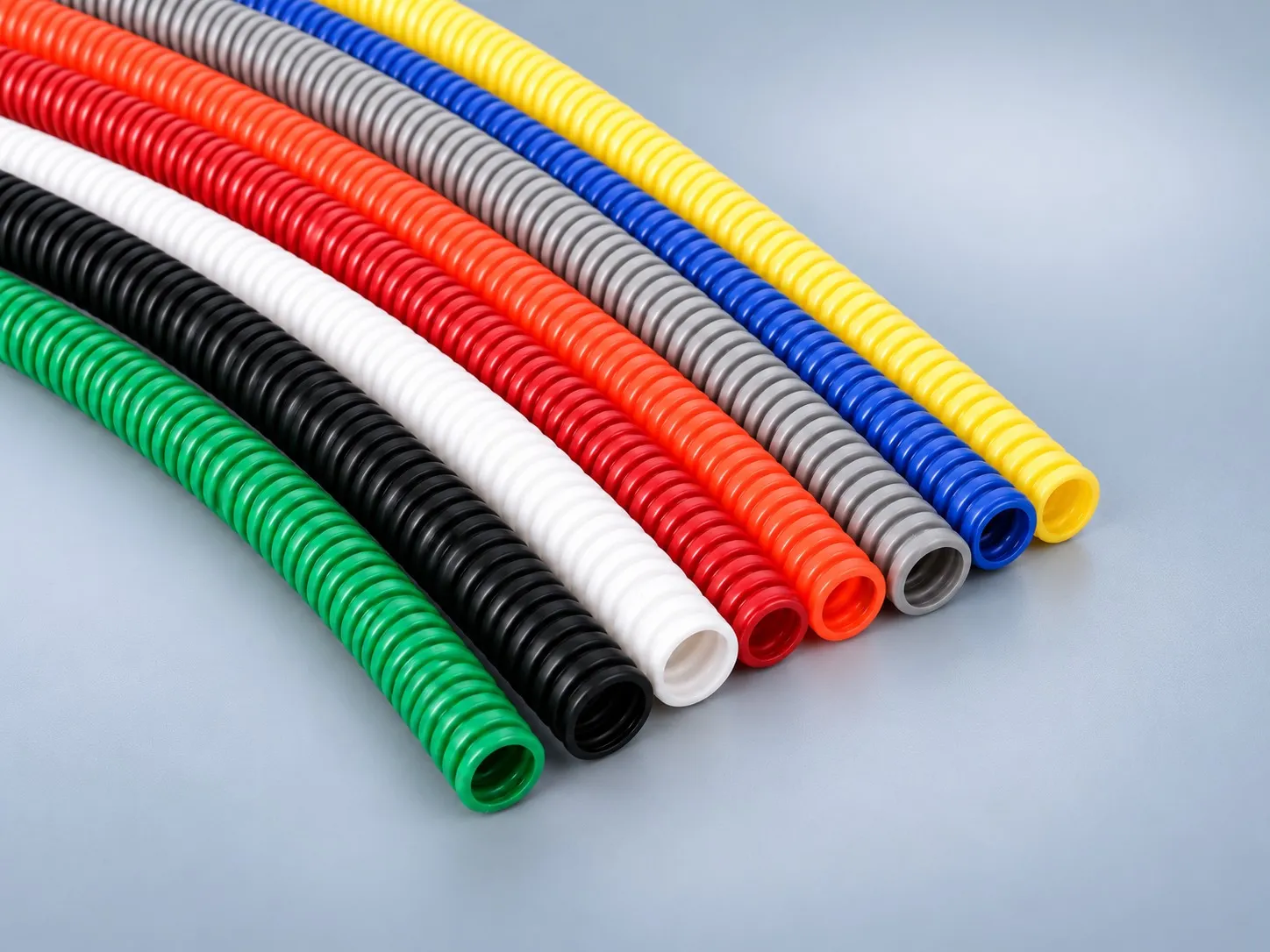 PA6 — View specifications ↗
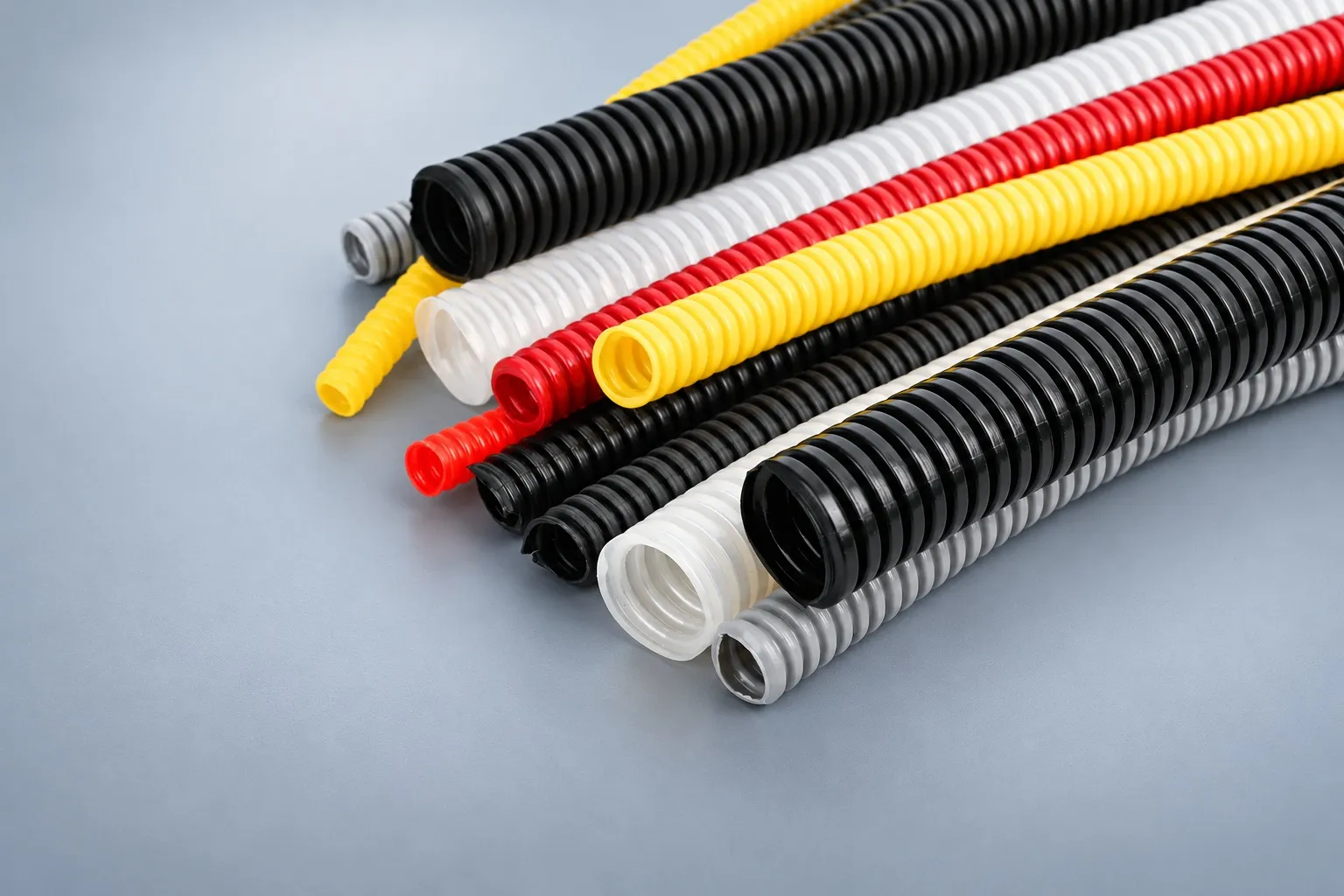 PP — View specifications ↗
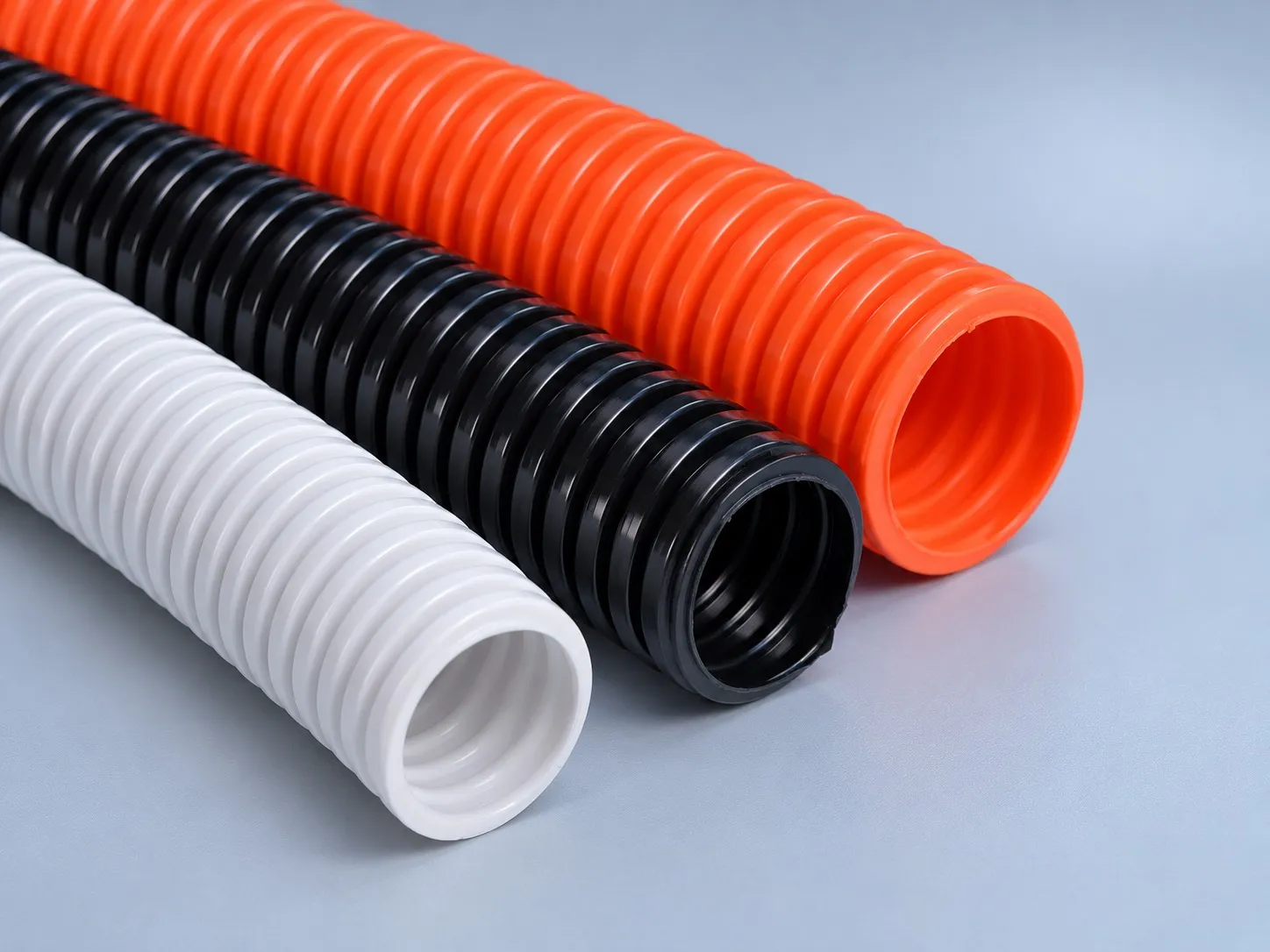 PE — View specifications ↗
3. Check dimensions, split construction and fittings together
Use the inside diameter to assess cable clearance and the outside diameter and corrugation profile to check fitting compatibility. Allow clearance appropriate to the installation. Do not treat a nominal size code as the actual inside diameter, or assume that a millimetre-to-inch conversion establishes a standard trade size.
Split tubing allows side entry of a cable bundle; unsplit tubing generally requires feeding cables through an end. Split construction does not establish water protection. For snap-fit connectors, verify the locking design, tube diameter and corrugation fit rather than relying on appearance or thread size alone.
Explore quick-fit conduit connectors →
4. Prepare a useful request for quotation
- Application and installation photos; fixed or moving routing.
- Inside and outside diameters, length, tolerances and available bend space.
- Material requirements, colour and split or unsplit construction.
- Continuous and short-term temperatures, exposure and required tests.
- Fitting interfaces, samples or drawings, and whether an assembled set is needed.
- Estimated quantity, delivery destination and requested lead time.
ZHENGDE supplies standard tubing, matching fittings and custom tubing assemblies. Share the dimensions, construction, interfaces and operating requirements to discuss a suitable option. Agree special performance and acceptance criteria before quotation, sampling and production.
Discuss your tubing requirements ↗Frequently asked questions
Is black corrugated tubing always suitable outdoors?
Colour alone is not evidence. Confirm weathering, UV and temperature suitability for the formulation.
Do PA6, PP and PE have the same flame rating?
Do not infer a rating from the material name. Verify the model, test standard, specimen thickness and report scope.
Is tube diameter enough to select a fitting?
Also check outside-diameter tolerance, corrugation profile and locking design; validate with a sample assembly where needed.
This guide supports selection discussions. The agreed specifications, drawings and applicable test documentation govern the selected model.